Economy

Borsa Istanbul Decouples Positively Amid Global Risks, Industrial Stocks Lead

724FinanceZeynep Kaya
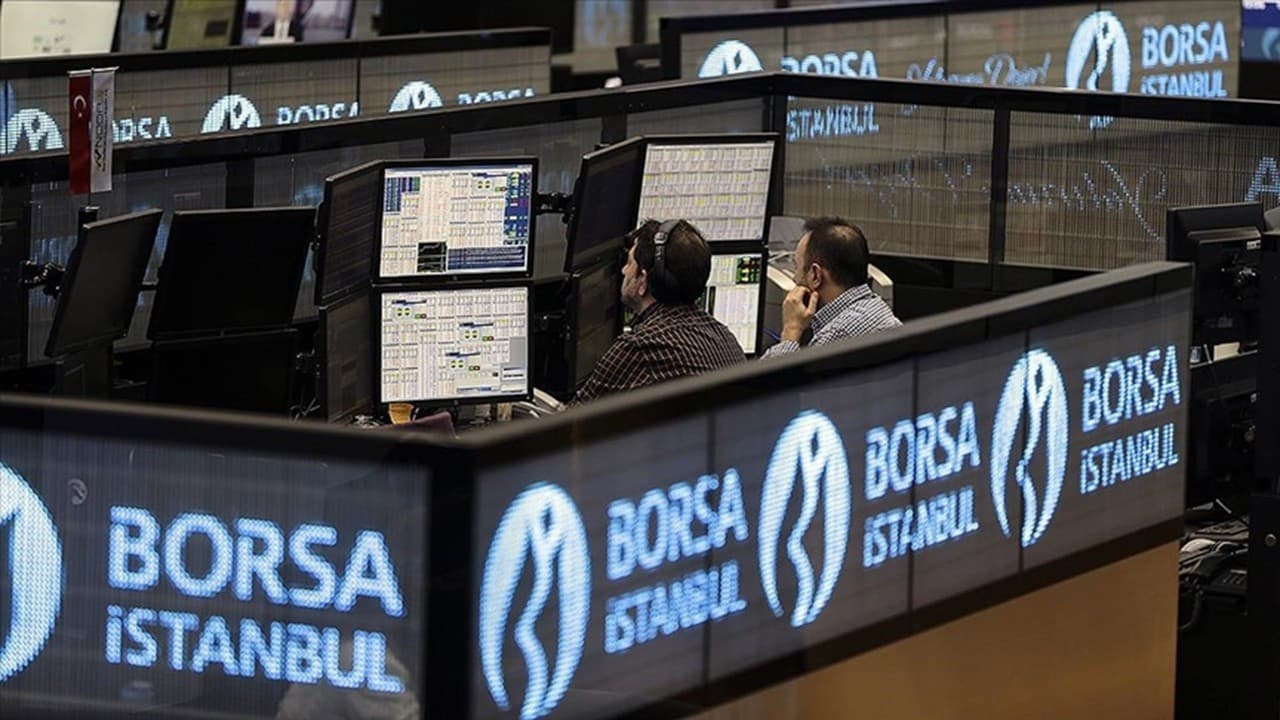
Borsa Istanbul Decouples Positively Amid Global Risks, Industrial Stocks Lead

Amidst rising geopolitical tensions between the US and Iran that tested global risk appetite, Borsa Istanbul staged a notable positive decoupling from European markets, closing the day in the green despite the negative regional sentiment. Investors focused on the resilience of the local index, as total trading volume reached 186.1 billion lira, sustaining market vibrancy.

Industrial Resilience vs Financial Drag

As intra-index dynamics shifted, the index found upward support from the performance of industrial and holding companies, countering the pressure exerted by banking stocks.
  • The banking index ended the day with a 1.51% loss, while the holding index gained prominence with a 1.48% premium.
  • Sector-wise, the sharpest rise was seen in chemicals, petroleum, and plastics with 4.40%, whereas the financial leasing and factoring index recorded the steepest decline, falling 9.13%.
  • The BIST 100 index showed an increase of 89.93 points compared to the previous close, maintaining its bullish trajectory.
  • Technical Resistance Test Under Geopolitical Shadow

    Although news flow regarding tensions between the US and Iran raised global risk premiums, the BIST 100 absorbed this pressure and diverged from European stock exchanges. Analysts note that the index is balanced at critical levels in the short term.
  • In technical analysis, 14,200 and 14,300 points are monitored as strong resistance zones, while 14,000 and 13,900 points stand as supports.
  • While tomorrow's domestic data calendar is expected to be calm, UK unemployment data and ZEW economic confidence indices for Germany and the Eurozone will determine global volatility abroad.
  • Expectations for Monetary Policy Stance

    Market participants' focus has shifted to the Monetary Policy Committee (PPK) decision, which will shape credit costs and inflation dynamics in the coming period. The AA Finance expectation survey reveals that economists do not foresee changes in the policy rate.
  • A vast majority of economists predict that the TCMB policy rate will be kept steady at 37% in July.
  • This expectation strengthens the possibility of cash flows and credit costs locking at current levels to preserve financial stability.
  • From an individual portfolio management perspective, the widening gap between the retreat in banking stocks and the strength in industrial shares sends a significant signal. Specifically, the 9.13% drop in the leasing sector may indicate an increased perception of risk in credit and consumer finance costs. Investors should interpret the TCMB's 37% rate decision as an indicative "hold" stance and prioritize liquidity management during this process.
    Zeynep Kaya

    Financial Analyst: Zeynep Kaya

    Bireysel Kredi ve Tüketici Finansmanı Stratejisti. Mevduat faiz oranlarını, kredi kartı regülasyonlarını ve tasarruf eğilimlerini bireysel servet yönetimi (Wealth Management) standartlarında analiz eden yazar.

    Disclaimer: The investment information, comments, and recommendations contained herein are not within the scope of investment advisory. Investment advisory services are provided individually by authorized institutions, taking into account the risk and return preferences of individuals. The comments and recommendations contained herein are general in nature. These recommendations may not be suitable for your financial situation and your risk and return preferences. Therefore, making an investment decision based solely on the information contained herein may not produce results that meet your expectations.

    © 2026 724Finance - All Rights Reserved.Original Source: Ekonomim.com