
Economy
NASA Captures Turquoise Shift in Black Sea and Istanbul Strait: Phytoplankton Blooms Redefine Carbon Cycles
724FinanceZeynep Kaya
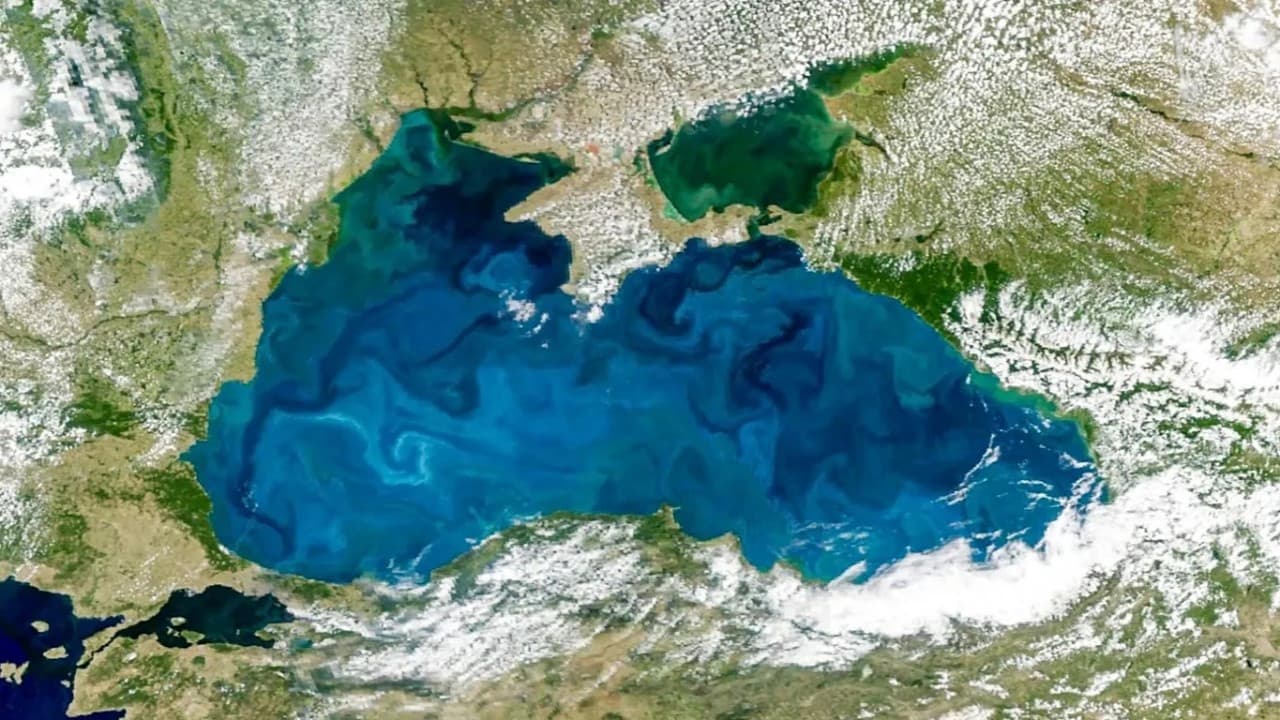
NASA's PACE satellite captured a vivid turquoise transformation across the Black Sea on June 22, 2026, caused by massive blooms of coccolithophores—single-celled phytoplankton with calcium carbonate shells. These microorganisms, reaching billions in late spring and early summer, reflect sunlight to create striking azure hues visible from space. Scientists emphasize their critical role in carbon sequestration, as they absorb CO2 from the atmosphere and ocean during growth, then deposit carbon-rich shells to the seabed upon death. Unlike diatoms dominated by silica, coccolithophores contribute significantly to long-term carbon storage in marine ecosystems.
Phytoplankton Bloom Dynamics: Unveiling the Turquoise Mechanism
Coccolithophores: From Ocean Blooms to Global Carbon Storage
Zeynep Kaya Analysis: Such phytoplankton events signal emerging investment trends in wealth management, particularly for coastal regions. For instance, Black Sea-bordering areas could see rising valuations in marine tourism and eco-projects leveraging carbon-sequestering ecosystems. Coccolithophores' carbon absorption efficiency may directly influence carbon credit markets and green bonds in capital markets. However, immediate economic shocks are unlikely; local economies will likely experience minimal direct financial impact, with effects concentrated in long-term environmental asset classes.