Crypto

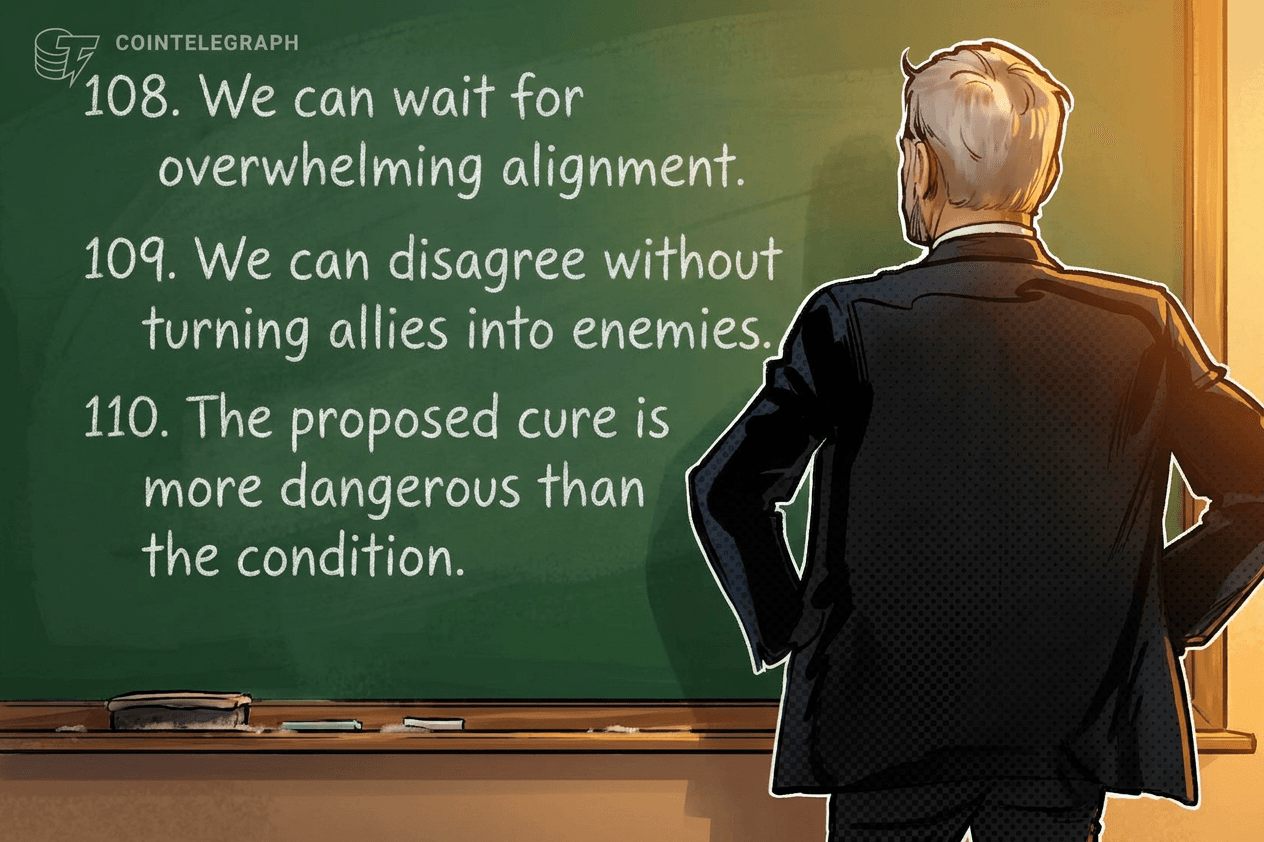
Bitcoin Protocol Wars Reignite: Saylor Rejects BIP-110 with 110 Reasons
724FinanceEmre Can
Bitcoin Protocol Wars Reignite: Saylor Rejects BIP-110 with 110 Reasons

MicroStrategy Executive Chairman Michael Saylor escalated the debate over Bitcoin’s future utility by publishing a comprehensive critique of the BIP-110 proposal, arguing that while the objectives to reduce network spam are valid, the proposed remedy of a temporary fork threatens the ethos of permissionless innovation.

The Core of the Protocol Conflict: Saylor Versus Traditionalist Developers

In a substantial 3,700-word post on X.com, Saylor, who oversees the largest corporate Bitcoin treasury, advocated for "neutral rules, hard consensus, open markets, and permissionless innovation." The proposal, introduced by pseudonymous developer Dathon Ohm and supported by Ocean protocol founder Luke Dashjr, seeks to limit non-fungible token-like Ordinals inscriptions to preserve Bitcoin’s function as a peer-to-peer cash system.

  • Saylor acknowledged the serious concerns regarding node operator costs and affordable payments but explicitly stated his disagreement with the proposed fix.

  • Critics, including Blockstream CEO Adam Back, have labeled BIP-110 as a "quest to police other people," arguing it contradicts the cypherpunk ethos.

  • The dispute represents a significant ideological split between maintaining Bitcoin strictly as "sound money" versus allowing it to evolve into a general-purpose data storage layer.
  • Technical Hurdles and Network Consensus

    Despite the heated rhetoric, the technical path to activation for BIP-110 faces steep resistance. The protocol upgrade requires a supermajority of 55% of validating Bitcoin nodes to signal support within a specific block period.

  • Data from the last period (number 475, between blocks 955,584 and 957,599) indicates that only 1% of blocks currently support the initiative.

  • This conflict is the most notable protocol-level dispute since the "Blocksize Wars" of 2015-2017, raising fears of a potential chain split.

  • The debate unfolds as Ordinals activity plummets, with daily inscriptions dropping below 10,000—a sharp decline from the peak of 400,000 observed in August 2023.
  • From a DeFi architectural perspective, proposals like BIP-110 attempt to solve layer-1 congestion through exclusion rather than scaling. While the reduction of arbitrary data bloat is a valid technical concern for node propagation, imposing temporary hard forks creates precedent for subjective censorship. Saylor’s stance reinforces the view that market forces and L2 solutions should handle data utility, preserving the base layer for monetary settlement and security.
    Emre Can

    Financial Analyst: Emre Can

    DeFi ve Web3 Ekosistemi Analisti. Akıllı kontrat platformlarındaki TVL (Total Value Locked) değişimlerini, likidite havuzlarını ve katman-2 (Layer-2) ölçeklendirme çözümlerini kod seviyesinde okuyan uzman.

    Disclaimer: The investment information, comments, and recommendations contained herein are not within the scope of investment advisory. Investment advisory services are provided individually by authorized institutions, taking into account the risk and return preferences of individuals. The comments and recommendations contained herein are general in nature. These recommendations may not be suitable for your financial situation and your risk and return preferences. Therefore, making an investment decision based solely on the information contained herein may not produce results that meet your expectations.

    © 2026 724Finance - All Rights Reserved.Original Source: CoinTelegraph