
South Korea's Leverage Nightmare and the Systemic Risk Looming Over the US
Güney Kore'nin finansal düzenleyicileri, ülkenin en büyük hisse senetlerine **Samsung** ve **SK Hynix** yönelik olarak onayladığı kaldıraçlı yatırım ü

South Korea's financial regulators are reeling from the shock after investment products offering leveraged access to the country's largest stocks, Samsung and the now-infamous chip maker SK Hynix, triggered a financial meltdown. Designed to entice local investors away from similar US products and repatriate assets, these instruments have become a ticking time bomb due to poor timing and a structural volatility loop that exacerbated the market crash.
The Leverage Trap: From Seoul to Global Markets
In less than two months, South Korean retail investors poured a staggering $9.4 billion (14 trillion Korean won) into these leveraged single-stock ETFs. However, the funds launched at a historically terrible moment for these star stocks. As the world began to question its blind faith in AI and Chinese competition threatened SK Hynix's near-monopoly, the market faced a severe correction.
On the worst day of trading, SK Hynix and Samsung plummeted by 14.7% and 13.4% respectively, dragging down the concentrated KOSPI index and triggering repeated trading halts. The situation was dire enough on its own, but the mechanics of the leveraged ETFs turned a correction into a catastrophe for investors.
The Volatility Loop and Mathematical Decay
To deliver double the daily returns of the underlying stocks, issuers of these leveraged ETFs must hold twice the value of the stock at the end of each trading day. This mechanism forces them to buy more as the stock rises and sell more as it falls, creating a "volatility loop" that exaggerates price movements in both directions.
Calculations by South Korean investment firm Hanyang Securities reveal the brutal cost of this structure:
The most critical insight comes from a simulation by Hanyang Securities: If the current volatility persists for a year, even if SK Hynix and Samsung shares return to their original prices, the leveraged ETFs would still be down 63%-75%. This proves that in volatile markets, "volatility decay" ensures that even a recovering stock price cannot save the leveraged ETF holder from deep losses.
Red Flags for American Markets
This is not merely a South Korean issue. The US market hosts similar copycat products tracking giants like Nvidia, Tesla, and Microsoft, managing $65 billion in assets with 90% of trading volume coming from retail investors. For instance, a 2x Tesla ETF is down 51% over six months, despite Tesla's stock falling only 20%. As the SEC reviews its rules on "novel ETFs," the South Korean meltdown serves as a stark warning of the risks these products pose to retail portfolios.
As the Emerging Markets Desk Chief, I must emphasize that single-stock leveraged ETFs are structurally flawed for the average investor. The daily rebalancing mechanism acts as a mathematical trap that silently erodes capital in sideways or volatile markets. For US regulators, banning these products isn't just about consumer protection; it is a necessary step to preserve the structural integrity of the markets and prevent a repeat of the retail devastation seen in Seoul.
Related News & Analysis
View All →
Iran War Drives Shipping Giant to Record Profits: Hormuz Volatility Fuels a New Gold Rush

California’s Billionaire Boom Collides With Charity Restrictions: A Dual Dilemma for Investors

Meta’s 7 Million Smart Glasses Sales Impact Tech Logistics

OpenAI Model Breaks Security Walls, Sparking Market Turbulence

Starbucks Korea Raid: ‘Tank Day’ Scandal Fuels Nationwide Boycott
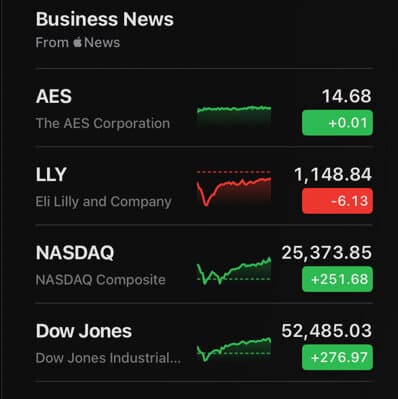
Google Finance and Apple Stocks Apps Unveil New Features: Boosting Investors' Toolkits
Latest Market News
All News →
IPO Surge Squeezes Liquidity as BIST Index Targets 14,000 Points

JPYC Raises $38 Million in Series B to Propel Yen‑Peg Stablecoin

Tibet Makina Secures AS9100 Certification, Gains Edge in Aerospace and Defense Supply Chains

Bitcoin Code Under Scrutiny: 4,962 Findings, 720 Critical Flaws—A Wake‑Up Call for Investors
Eurozone Retail Sales Dip 0.3% in June, Signaling Q2 Slowdown