
EU’s New Solar Panel Origin Rule: A Double‑Edged Sword for Turkish Manufacturers
724FinanceZeynep Turan
Key Highlights
Avrupa Birliği, 2026’nın ortasında güneş paneli alımlarını fiyat yerine menşe üzerinden yönlendirmeye başladı; bu hamle, Türkiye’nin ikiye bölünmüş PV
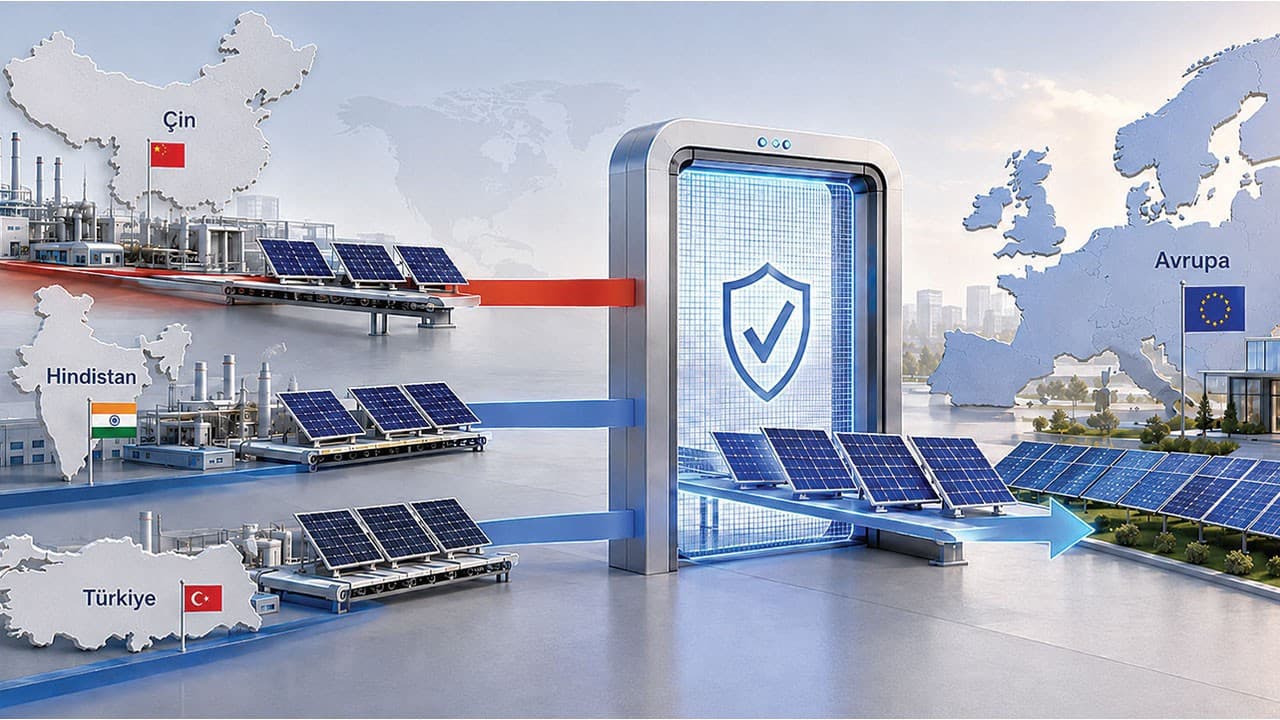
The European Union has shifted its solar‑panel procurement focus from price to origin as of mid‑2026, reshaping Turkey’s bifurcated PV landscape.
What the EU’s Origin‑Centric Rule Means
On 4 March 2026 the EU adopted the Industrial Acceleration Act, introducing a “origin quota” for public procurements that favours suppliers either EU‑origin or from countries with a trade agreement with the EU. The framework mandates a 30 % price‑non‑price criterion and aims for 95 % of procured products to meet the origin restriction.Italy’s Auction Excludes Chinese Modules
Italy’s energy agency GSE concluded the FER‑X auction in December 2025, allocating 1.1 GW across 88 projects. The average winning bid was €66.38 /MWh, about 17 % above a comparable unrestricted auction. The price gap stemmed solely from a ban on Chinese‑origin modules, cells and inverters for projects larger than 1 MW.Tata Power’s Gateway to Europe
India’s energy giant Tata Power announced a 2‑3 GW panel and cell export plan targeting Italy. The EU‑India free‑trade agreement, sealed in January 2026, will take effect in early 2027 and grant 93 % of Indian exports tariff‑free access.Turkey’s Two‑Tier PV Industry
Dual Regulatory Pressure: Customs Union vs. Public Procurement
The EU‑India trade pact may erode Turkey’s Customs Union benefits, while Turkey remains merely an observer in the Public Procurement Agreement, exposing it to exclusion from EU‑origin procurement. Simultaneously, domestic pressures rise: input costs have doubled (e.g., $85 /kg → $170 /kg for cells), and a shift to hourly net‑metering curbs demand for residential panels.Zeynep Turan – Consumer Financing & Mortgage Strategy Analyst: The EU’s origin‑centric policy should be viewed not as a rescue but as a “window of opportunity.” Integrated manufacturers can capture premium EU contracts by securing origin certification, whereas cell‑importing firms confront cost pressure and market exclusion. This split will reshape not only sectoral competition but also Turkey‑EU trade dynamics. From a financing perspective, origin‑based premiums could lower capital costs for local producers while tightening cash flows for import‑reliant firms, making a review of credit terms and loan conditions essential.
Related News & Analysis
View All →
Long‑Term Loan Rates Hit 35%: Treasury’s Dilemma and Consumer’s Predicament
ICBC Grants İş Bank $200 Million Loan, Redefining Turkey's Financing Landscape
China Holds LPR Steady for 15th Month: Implications for Credit Margins and Economic Strategy
Exchange Conversion Premium to Double: What Does It Mean for Commercial Sectors?
US Treasury's Shock Move in Bonds: 30-Year Yields Drop to 5.19% Amid Market Turmoil
Turkish Banks Struggle with Interest Rate Pressure and Political Uncertainty
Latest Market News
All News →Rising Yields Threaten to Burst the Stock-Market Bubble: How Markets Will React

Human Capital Resilience in the Age of AI: Implications for Financial Markets
![[ALKLC] ALTINKILIÇ GIDA VE SÜT SANAYİ TİCARET A.Ş.
Katılım Finansı İlkeleri Bilgi Formu - Katılım Finansı İlkeleri Bilgi Formu](/_next/image?url=%2Fuploads%2Fkap-default.png&w=3840&q=75)
[ALKLC] ALTINKILIÇ GIDA VE SÜT SANAYİ TİCARET A.Ş. Katılım Finansı İlkeleri Bilgi Formu - Katılım Finansı İlkeleri Bilgi Formu

Turkey Cuts Inflation Target from 75–80% to 30%: Bolat’s Bold Move

Hyperliquid Goes to the US: Regulatory and Market Shockwaves