Stock Market

U.S. Treasury Places Ten Nations on FX Policy Watch List: Implications for Global Markets

724FinanceKerem Tufan
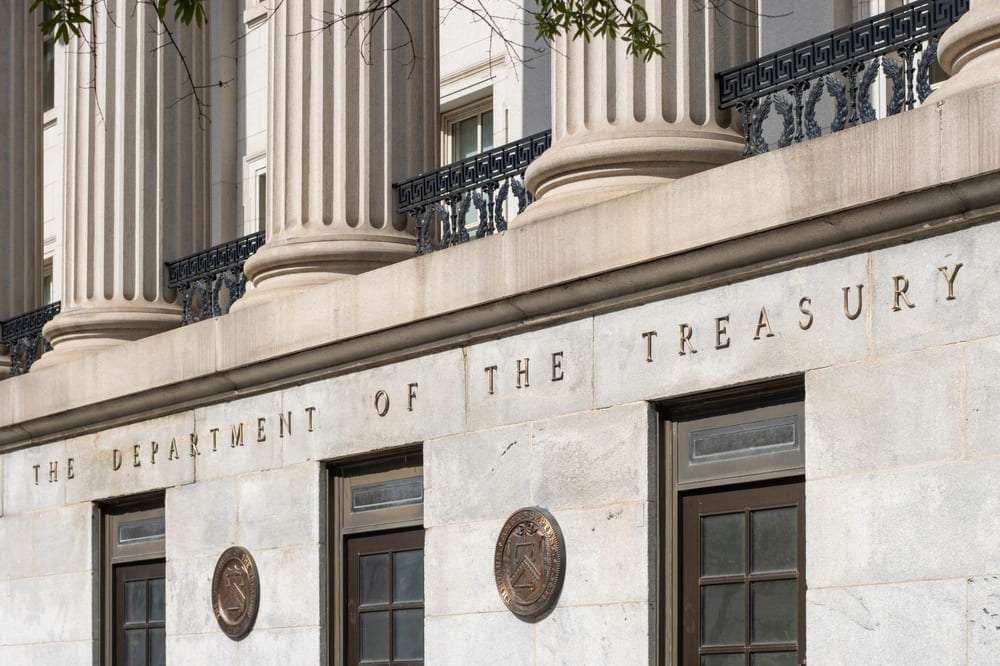
U.S. Treasury Places Ten Nations on FX Policy Watch List: Implications for Global Markets

The U.S. Treasury Department has added 10 countries to its foreign‑exchange policy watch list in response to rising currency volatility.

Strategic Selection: Countries and Inclusion Criteria

  • Turkey, Brazil, Mexico, India, Italy, Spain, South Africa, Indonesia, Poland, and Canada; selected based on high current‑account deficits, shrinking foreign‑exchange reserves, and frequent central‑bank interventions.
  • Over the past 12 months, the listed economies have experienced an average 8% increase in FX volatility.
  • The Treasury aims to monitor monetary policies closely to curb potential capital outflows.
  • Market Reaction: FX Rates and Liquidity Flows

  • Following the announcement, the DXY index rose 0.4%, signaling a modest risk‑off shift.
  • The EUR/USD pair slipped 0.6%, while TRY/USD weakened by 1.2%.
  • Global fund managers withdrew roughly $3.2 billion in short‑term liquidity from assets tied to the watch‑list countries.
  • Central‑Bank Pressures

  • The watch list may compel central banks to consider rate hikes or direct FX interventions.
  • The Central Bank of the Republic of Turkey (CBRT) reaffirmed its 8.5% policy rate and noted that additional measures are under review.
  • Other jurisdictions have expanded reserve sales and swap lines to stabilize their currencies.
  • Risk‑Reward Scenarios

  • Risk Scenario: A loss of FX control in any watch‑list country could trigger regional capital flight, potentially dragging emerging‑market ETFs down by 5%.
  • Opportunity Scenario: Treasury oversight may boost investor confidence in safe‑haven assets, lifting demand for U.S. Treasury bonds by 2%.
  • Mid‑Term Outlook: The monitoring period is expected to last 6‑12 months, with volatility projected to settle between 3‑4%.
  • Market participants should view the Treasury’s move not merely as surveillance but as a signal shaping global financial stability. SMEs and mid‑size firms must revisit hedging strategies to manage currency risk, while staying ready for possible policy tightening by central banks. Companies with foreign‑currency debt should bolster liquidity buffers against any rate‑rise shock. Although short‑term uncertainty may rise, the action could pave the way for a more transparent and predictable FX environment over the longer horizon.
    Kerem Tufan

    Financial Analyst: Kerem Tufan

    Ticari Krediler ve Merkez Bankası Politikaları Direktörü. KOBİ kredilerindeki daralmayı, ticari kredi büyüme hızını ve makroihtiyati tedbirlerin bankacılık sektörüne etkisini analiz eden eski bankacı.

    Disclaimer: The investment information, comments, and recommendations contained herein are not within the scope of investment advisory. Investment advisory services are provided individually by authorized institutions, taking into account the risk and return preferences of individuals. The comments and recommendations contained herein are general in nature. These recommendations may not be suitable for your financial situation and your risk and return preferences. Therefore, making an investment decision based solely on the information contained herein may not produce results that meet your expectations.

    © 2026 724Finance - All Rights Reserved.Original Source: Foreks.com