
US Innovation Stronghold Crumbles: Chinese Universities Seize Tech Leadership
DeepSeek'in maliyeti düşürerek ABD'nin en iyi yapay zeka modelleriyle yarışması veya Çin'in hipersonik füze testlerinin Washington'u hazırlıksız yakal

When DeepSeek unveiled an AI model rivaling America's best at a fraction of the cost, or when a Chinese hypersonic missile test caught U.S. intelligence off guard, global observers called it a 'Sputnik moment.' However, a sweeping new National Bureau of Economic Research (NBER) study of nearly 14 million Chinese patents suggests the real story is much deeper and far more unsettling for the United States.
The Silent Revolution on Campuses
Harvard Business School’s Josh Lerner and his co-authors investigated who is actually filing patents behind the 14 technology areas the Pentagon deems critical—advanced computing, space technology, AI, hypersonics, and biotech. The results paint an alarming picture for the U.S.:
While innovation in China was expected to center around giants like Huawei or Tencent, the research reveals a much more diverse landscape. Universities are 'more represented' in critical tech than anywhere else in China's patent system, reversing the U.S. pattern where academic patenting remains 'more of a sideshow.'
Washington’s Science Cuts Deepen Wounds
As China closes the gap in patent quality—matching or surpassing U.S. counterparts in some technologies—political maneuvers in Washington are exacerbating the divide rather than closing it. While the Trump administration’s crackdown on international students strains campuses, federal research grant cuts are crippling university infrastructure.
The Brennan Center for Justice calculates total NIH and NSF cuts and freezes since 2025 at over $3 billion, with roughly $1.4 billion still frozen or unresolved. Lerner warns that while the consequences won't be immediate, they will manifest years or decades later in the competition with China.
The Balance of Power in R&D Shifts
China surpassed the U.S. in total R&D spending for the first time in 2024, investing $1.03 trillion against America’s $1.01 trillion. With R&D growth topping 14% annually since 2004—more than double the U.S. pace—the momentum is clearly on the other side of the Pacific.
In June, Harvard lost the top spot in the Nature Index Research Leaders for the first time since 2015. Among academic institutions, Zhejiang University (alma mater of DeepSeek founder Liang Wenfeng) moved into first place, with Harvard falling to second. Nine of the top 10 academic institutions globally are now Chinese.
These findings indicate that the quality gap many assumed would protect American tech leadership is closing. Models like DeepSeek, Moonshot, and Z.AI are going toe-to-toe with U.S. frontier labs and beating them on cost. The share of Chinese critical-technology patents containing 'disruptive' technical language surged from under 2% in the early 1990s to 16% by 2022, closing in on the American share of roughly 20%.
As an aviation logistics analyst, reading this data signals a structural shift in the 'air bridge' supply chain. China's dominance in university-led innovation for biotech and advanced computing suggests that the source of high-value, time-sensitive components is becoming increasingly localized in Asia. While U.S. R&D cuts may stifle domestic production, the demand for air freight capacity to transport these critical technologies from East to West will likely remain robust, reinforcing the strategic importance of trans-Pacific cargo routes even amidst geopolitical friction.
Related News & Analysis
View All →
Yield Fortress Before the Fed Easing: The Final Surge in High-Yield Savings

Rocket Companies CEO Varun Krishna Fuses Silicon Valley Intellect with Detroit Grit in $16B Gamble

Stalemate in the Strait of Hormuz Sends Oil Prices to New Highs

John Lewis CEO Peter Ruis Steps Down, Signaling a New Era in Retail

London's Consumer Crackdown: Burnham Targets 'Rip-off' Culture to Boost Household Liquidity

AI’s Dark Alliance: LLMs Team Up for Sophisticated Cyberattacks
Latest Market News
All News →
Harvard Historian Jill Lepore Warns of Silicon Valley's 'Artificial State'

Bitcoin Holds Above $65,000 as Iran-Oman Deal Eases Hormuz Strait Fears
Yield Fortress Before the Fed Easing: The Final Surge in High-Yield Savings
Job Cuts in the U.S.: A Fed Rate Cut Signal Boosting Stocks
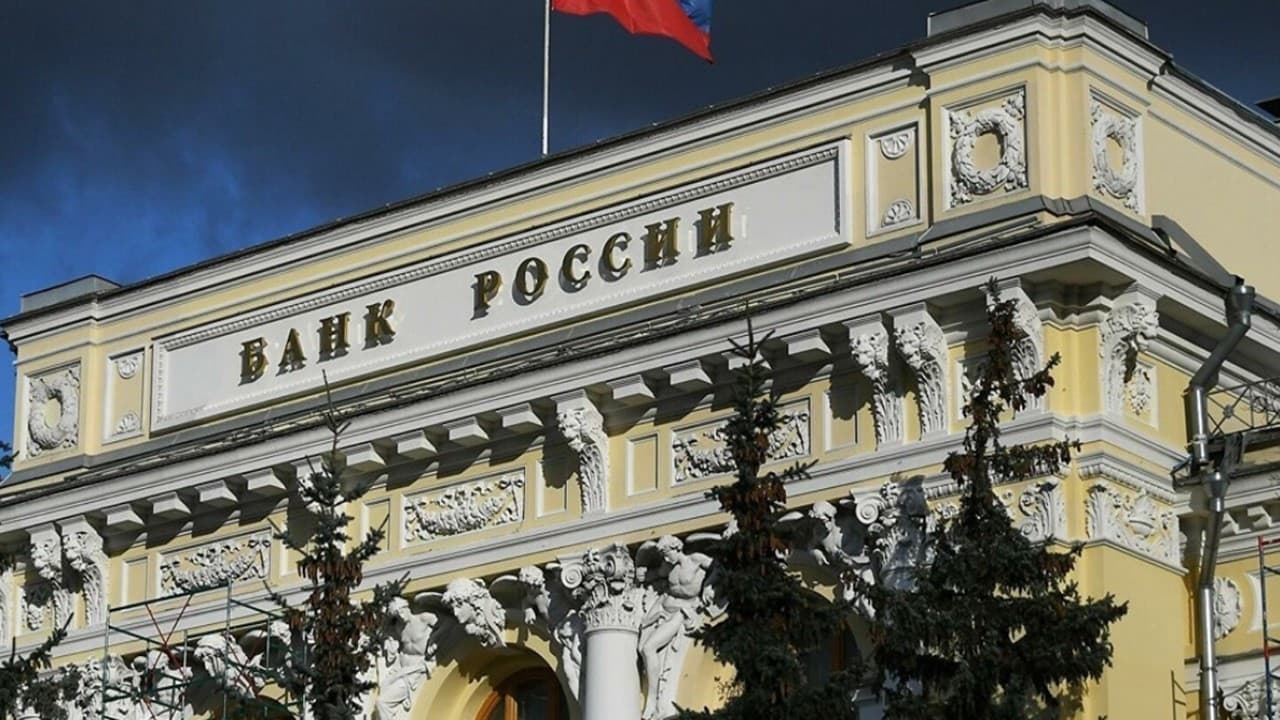
Russian Central Bank Mandates Emergency Credit Package for Businesses Under Attack
![[ZKBVR] ZKB VARLIK KİRALAMA A.Ş.
İhraç Tavanına İlişkin Bildirim
/ PNSUT - Kira Sertifikası İhracına İlişkin Yönetim Kurulu Kararı Alınması](/_next/image?url=%2Fuploads%2Fkap-default.png&w=3840&q=75)